Français (France)
 Deutsch (DACH)
 Italiano (Italia)
 Dutch (Nederlands)
 English (United States)
 English (Canada)
 French (Canada)

IN THIS PAPER
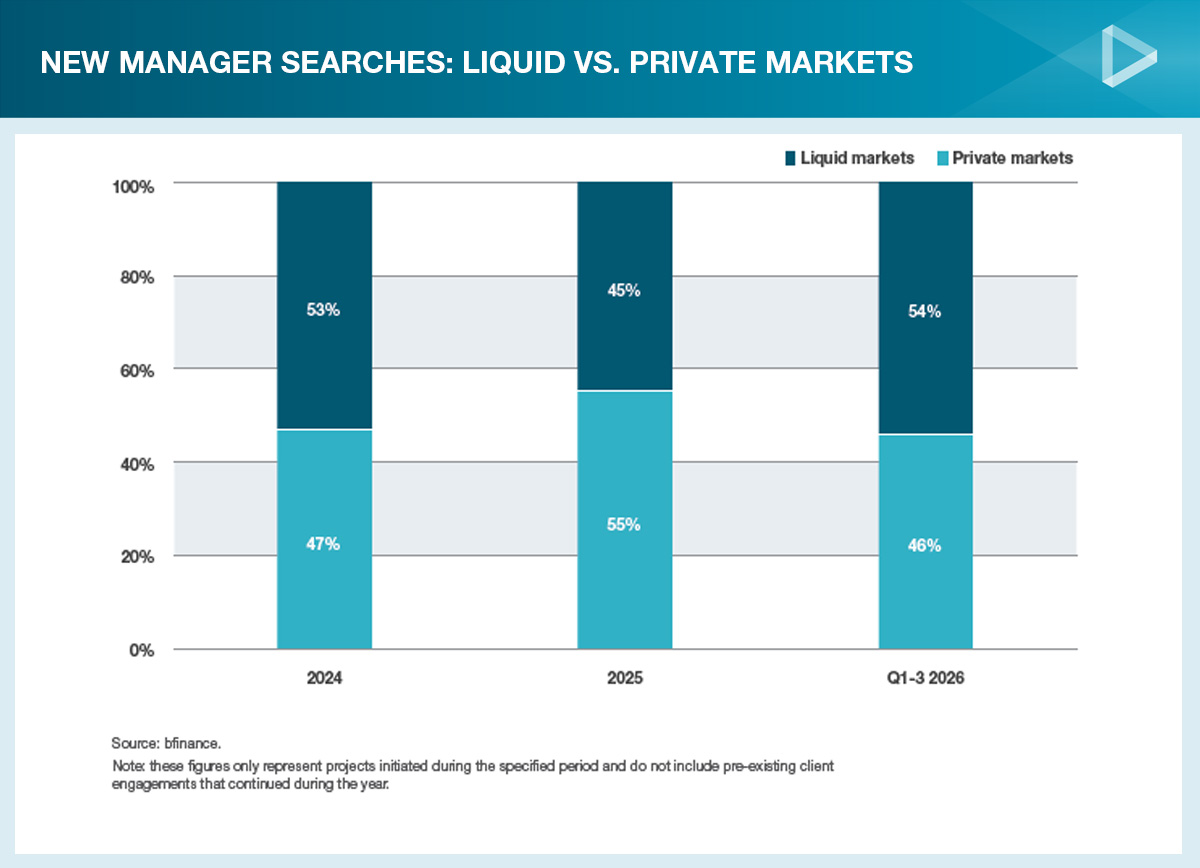
Liquid markets have regained favour, accounting for 54% of new bfinance projects year to date, up from 46% in Q1 and reversing the private markets dominance of 2025. Senior allocators are increasingly focused on portfolio liquidity, both to reposition strategically for greater resilience and to respond tactically to opportunities and threats during periods of market stress.
As expectations of gradual rate cuts gave way to renewed monetary tightening over the course of 2026, traditional portfolio foundations have come under further scrutiny. Reliance on bonds to offset equity falls, and on broad equity beta to drive 60:40 portfolios, has given further ground to a more active approach built around structural trends, concentration risk and broader diversification.
Within liquid markets, consistent hedge fund returns and sustained demand for overlays spanning currency risk management and equity protection kept interest strong into year end. Global index-aware strategies continued to dominate equity activity.
In fixed income, clients increasingly pivoted towards sectors offering higher yields, including CLO equities and junior debt, with a marked rise in searches related to collateralised loan obligations and other securitised assets.
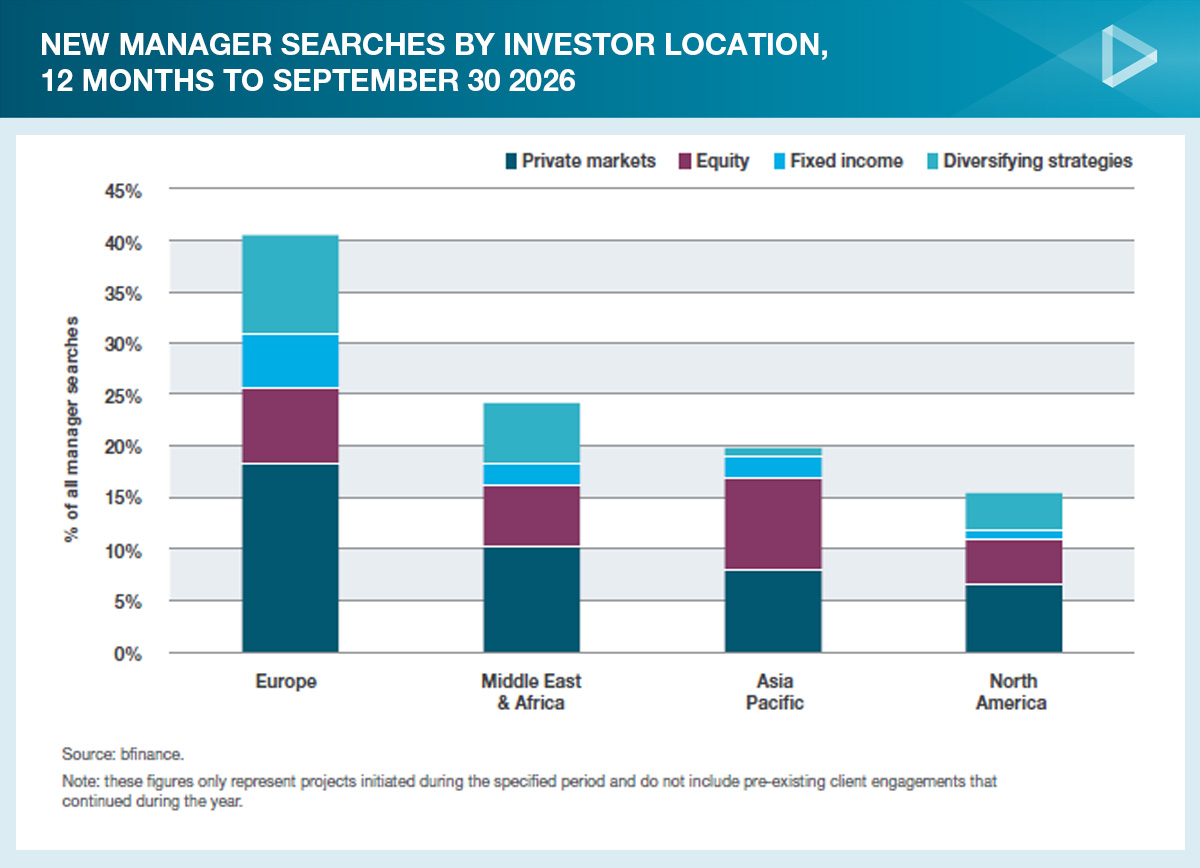
A higher risk-free rate has simultaneously raised the bar for risk assets and created operational challenges for private markets, where a weak private equity exit environment has become the defining backdrop of the ‘turbulent twenties’. Demand continued for floating-rate income from direct lending, secondaries across all four private market segments and inflation protection from real assets.
Private equity led bfinance private markets activity over Q3, supported by secondaries and growing wealth-channel demand for semi-liquid funds, adding further momentum to the bfinance wealth management business.
WHY DOWNLOAD?
Each quarter, bfinance publishes information on investor activity, key market trends and manager performance. A quarterly snapshot of the key developments within equity, fixed income and alternative investments, including analysis of which asset manager groups performed well and which didn’t.
The third quarter was defined by a divergence between bond and equity markets, as a renewed energy shock revived inflation concerns and pushed central banks back towards tightening. Long-dated government bond yields reached multi-decade highs while equities ended the quarter close to record highs, leaving investors to judge which signal better describes the road ahead. The starting assumptions of 2026 no longer hold, and portfolios anchored on them deserve a fresh look.
Important Notices
This commentary is for institutional investors classified as Professional Clients as per FCA handbook rules COBS 3.5R. It does not constitute investment research, a financial promotion or a recommendation of any instrument, strategy or provider. The accuracy of information obtained from third parties has not been independently verified. Opinions not guarantees: the findings and opinions expressed herein are the intellectual property of bfinance and are subject to change; they are not intended to convey any guarantees as to the future performance of the investment products, asset classes, or capital markets discussed. The value of investments can go down as well as up.