Français (France)
  Deutsch (DACH)
  Italiano (Italia)
  Dutch (Nederlands)
  English (United States)
  English (Canada)
  French (Canada)
bfinance insight from:

Anish Butani
Managing Director, Head of Infrastructure
Although institutional investors still report widespread satisfaction and conviction toward the ‘infrastructure asset class,’ a new bfinance asset owner survey reveals a more nuanced picture: one of narrowing risk appetite, intense scrutiny of valuations and a rethinking of implementation models. The broad investor enthusiasm of the 2010s has been replaced in the 2020s by a focus on selectivity and precision.
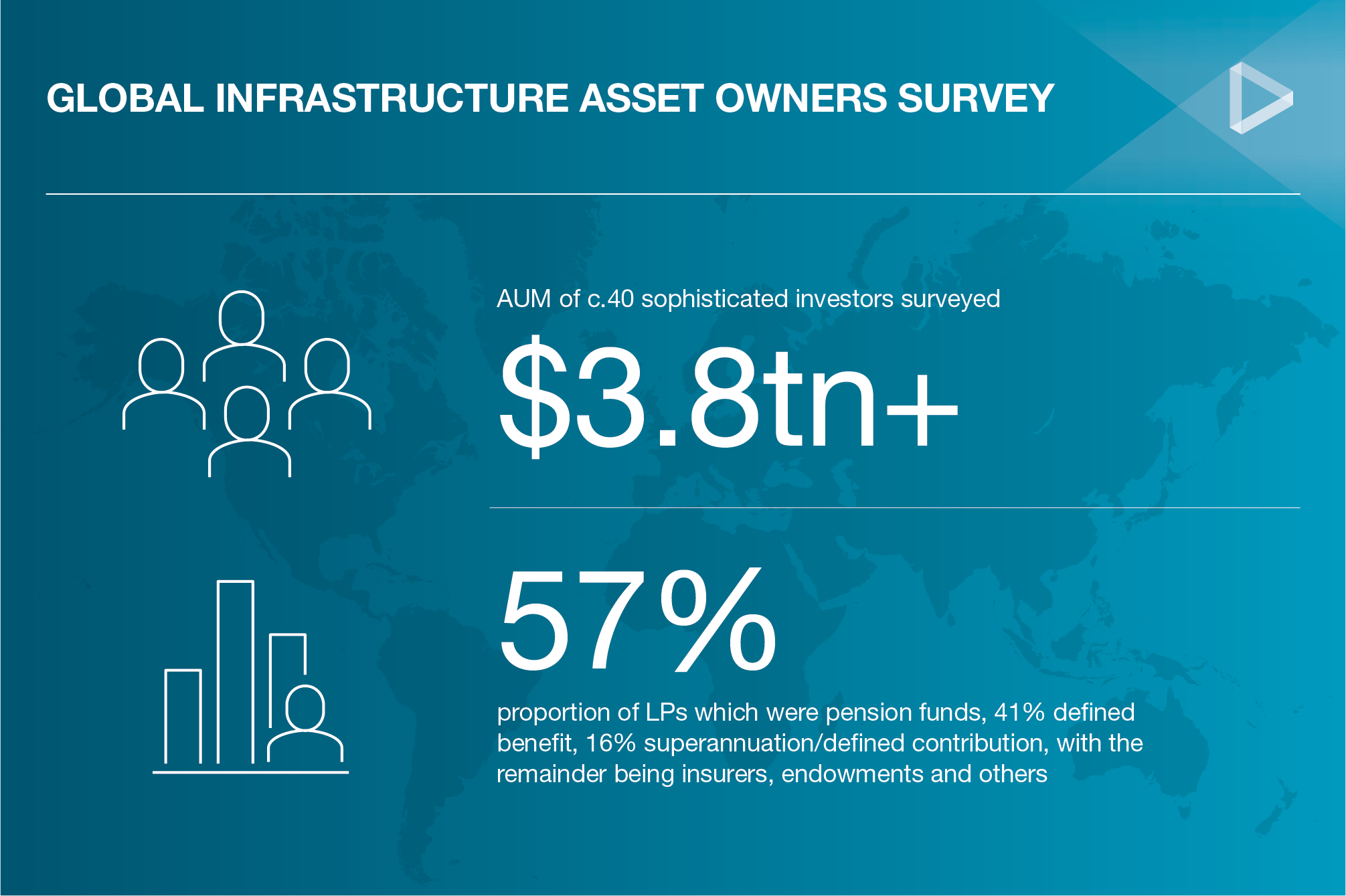
In a recent infrastructure investment survey, we spoke with more than 40 asset owners globally, who collectively manage more than US$2.3 trillion. This article summarises key findings:
Takeaway 1 - a satisfied but more selective client base that is keen to learn lessons from recent challenges
Takeaway 2 - serious concerns surrounding macroeconomic and geopolitical developments
Takeaway 3 - a shift in how investors approach manager relationships and preferred fund structures
Takeaway 1: Infrastructure investors are ‘satisfied’ but increasingly selective
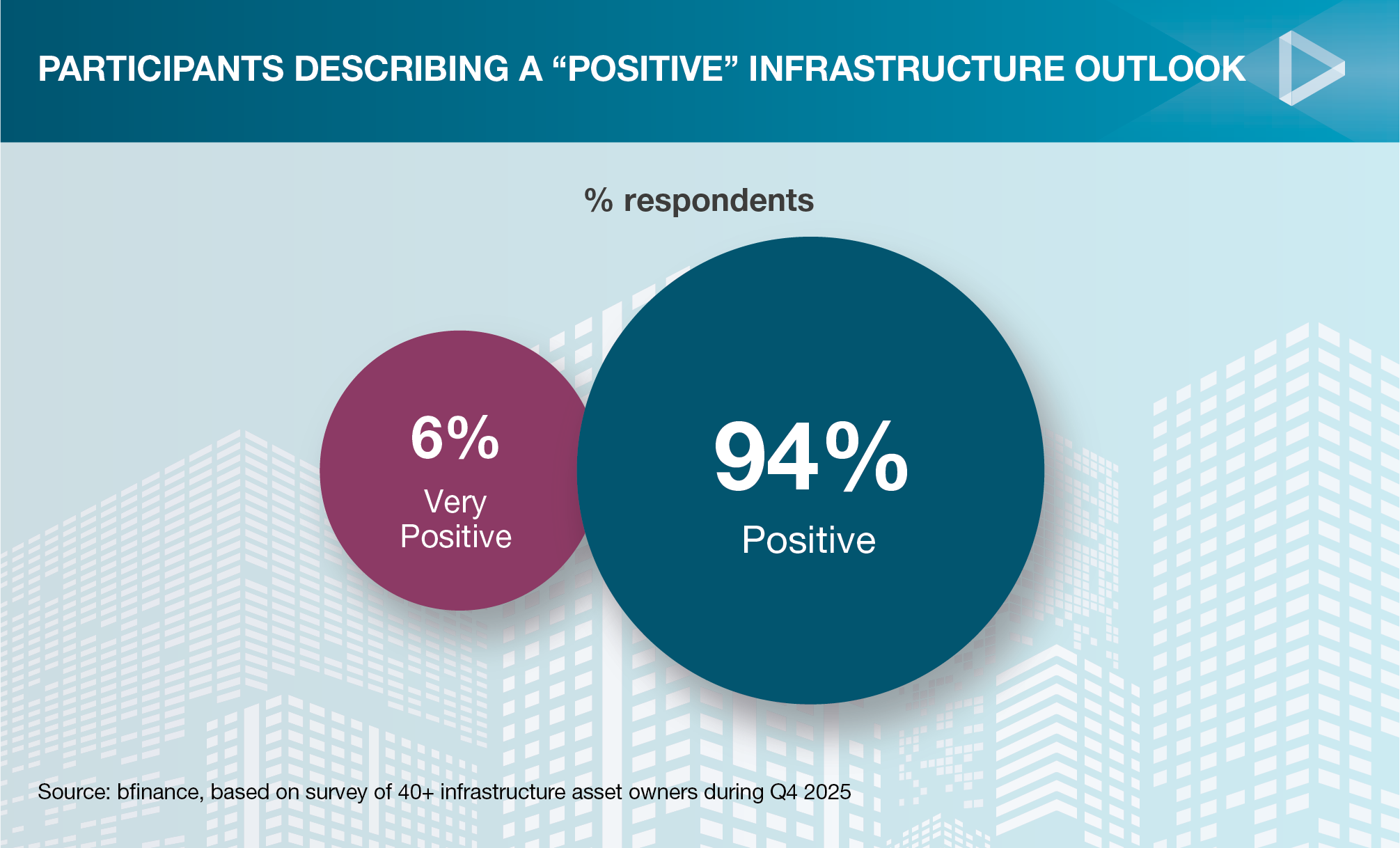
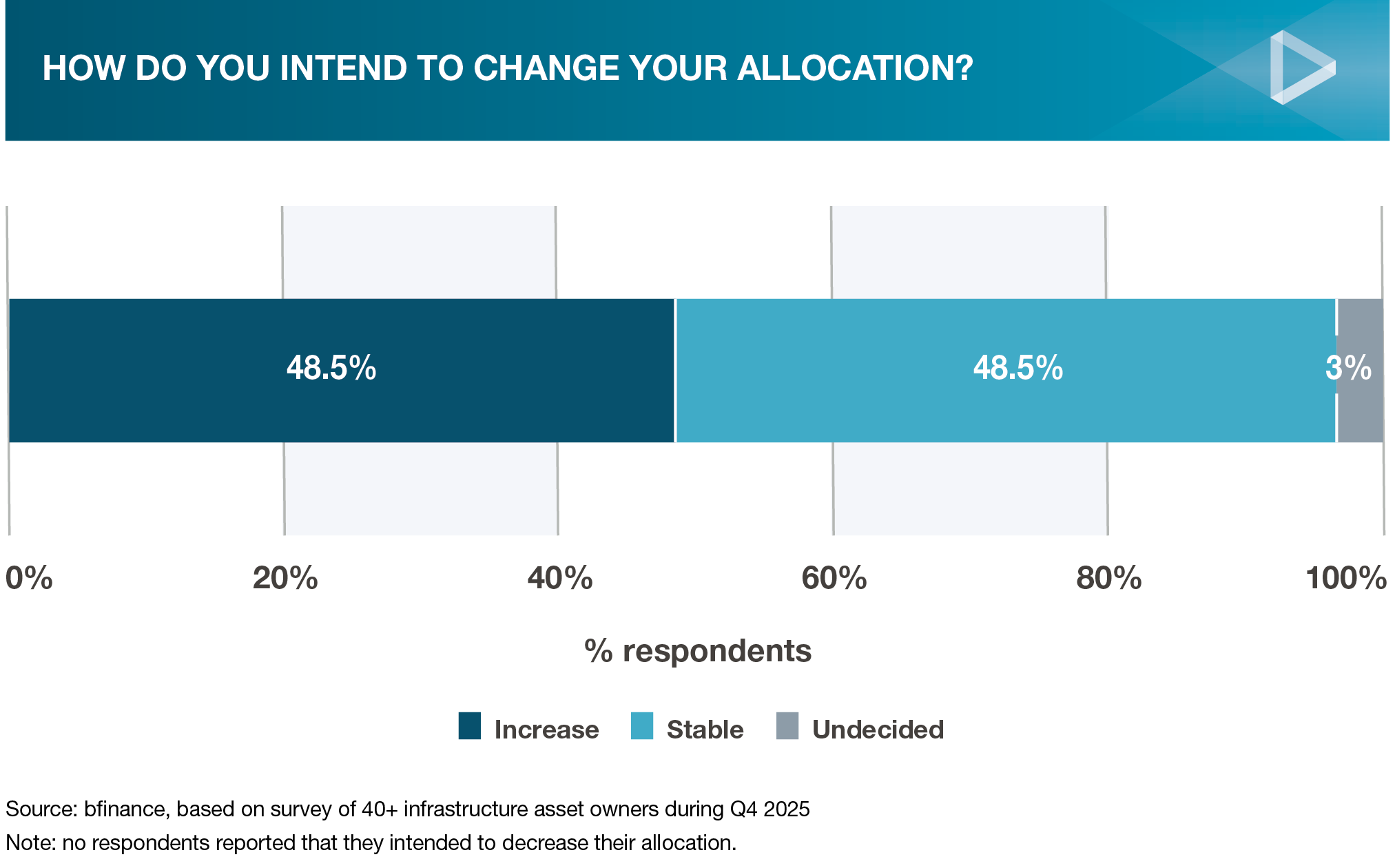
Every single investor surveyed described themselves as having a “positive” view toward the infrastructure asset class, as of late-2025 (some 6% were “very positive” versus 94% “positive”). Nearly half are currently increasing their exposure and zero are reducing allocations. Feedback was strong: the asset class has behaved as investors had hoped during a period of market stress, offering resilience, income and diversification.
Yet satisfaction is not synonymous with bullishness and being comfortable does not mean being indiscriminate. Fingers have been burned. Many investors reported hard lessons from recent projects that faced headwinds and communicated a resulting shift in strategy, such as a reduced tolerance for greenfield risk and certain types of fund structure.
We see infrastructure as providing stability, diversification and resilience… it has delivered for us and continues to be a core part of our programme.
We are increasing our allocation… and continue to see strong value in the asset class.
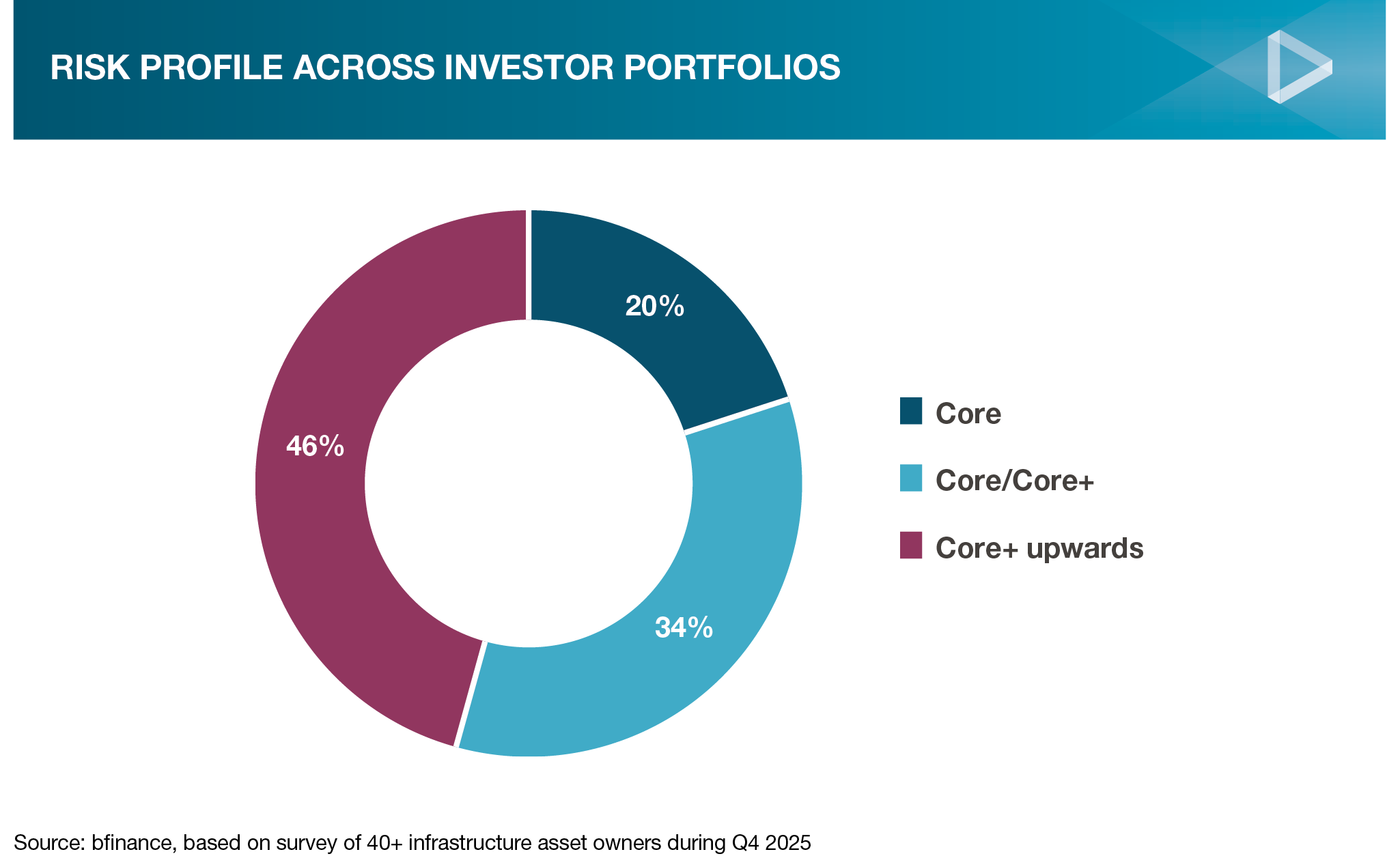
Survey data reveals that the centre of gravity for infrastructure allocations has shifted away from core: while core still forms a critical bedrock, core-plus and value-add strategies are now the workhorses of asset owners’ infrastructure portfolios, offering what many describe as the best “risk-reward” efficiency – especially in sectors like energy transition, power, digital connectivity and transport.
Fingers have been burned. Many investors reported hard lessons from recent projects.
That being said, investors are still keen to avoid tipping into private equity-style risk profiles in their infrastructure portfolios, even while they look up the risk spectrum in search of better return potential, thematic exposures and operational hooks. Indeed, we note a decline in tolerance for ‘greenfield’ asset exposure in favour of brownfield platforms with embedded growth opportunities.
Investors have become markedly more cautious toward development-stage projects, and many pointed to the same sources of discomfort: prolonged permit-gathering timelines, supply chain volatility, inflation-driven cost uncertainty, and recent first-hand anecdotal experiences with projects that ran over budget or schedule. Even allocators with full-governance flexibility are increasingly favouring operational, cash-yielding assets where capital expenditure can be deployed in a more controlled and value-accretive manner.
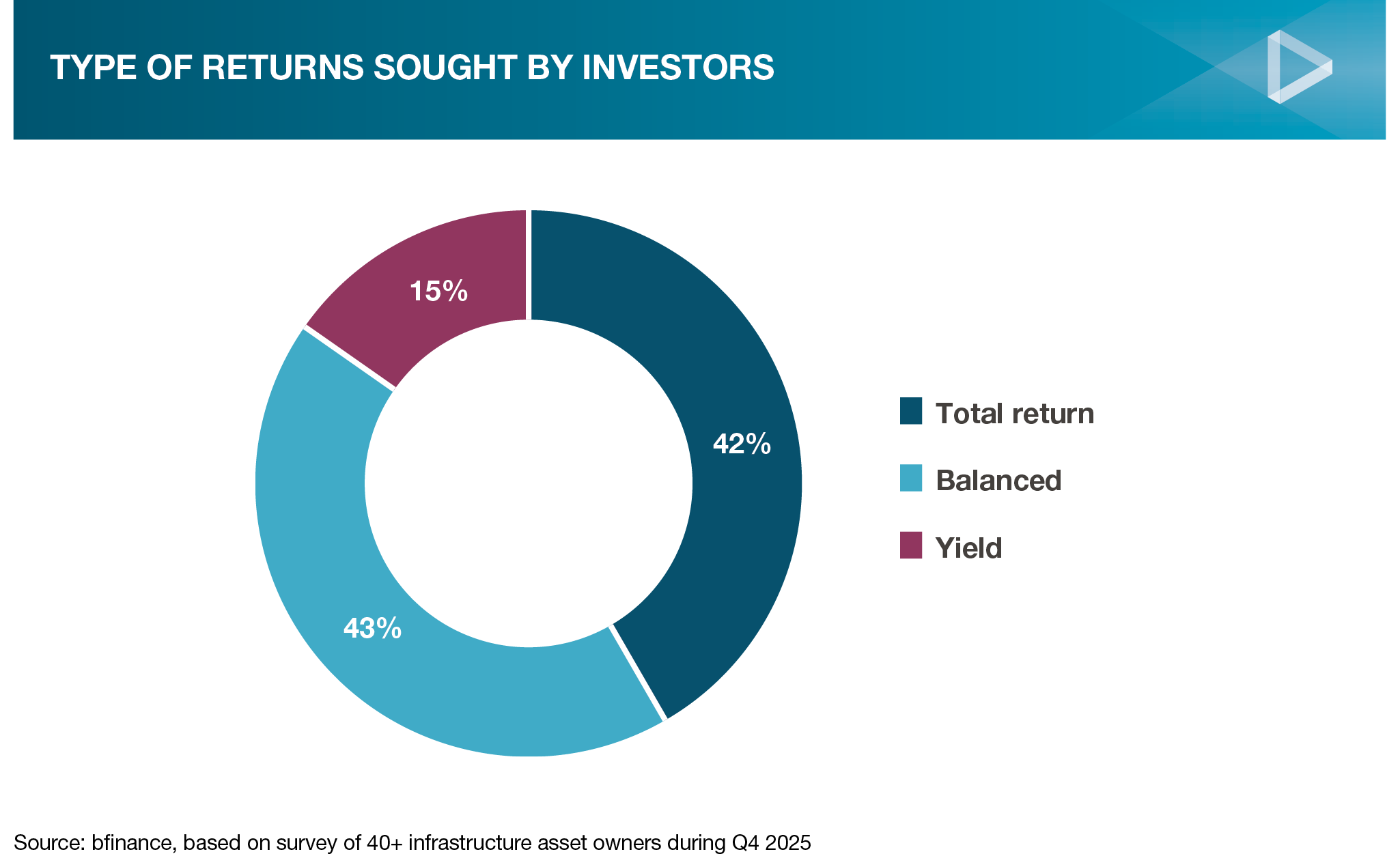
When there was a bigger focus on ESG (2020), a lot of capital was going into greenfield and building renewables; investors valued its additionality. Today, [we] prefer exposure to assets with an operating base that have some capex.
We also note diverse and often-strong views on the merits of mid-cap versus large-cap infrastructure in an asset class that has witnessed the rise of high-profile (and predominantly large-cap-focused) ‘mega funds.’ Many investors emphasised the advantages of the mid-market, citing lower competition, more levers for operational value creation and, crucially, better exit optionality.
We do note that midcap strategies appear to have been returning capital more efficiently in recent years, with smaller funds outperforming on DPI (distributions to paid-in capital).
Several of the investors surveyed noted that very large funds increasingly “sell to each other” or “club up,” reducing alignment and resulting in fee duplication. That being said, larger platforms can offer stability and resilience, while many strategically important assets are simply too large for mid-cap vehicles. A ‘pragmatic barbell’ was often visible in conversations surrounding strategy, with asset owners happy to use large-cap for core, long-duration holdings while targeting mid-cap for value generation.
In short, satisfaction with infrastructure is high and investors are now taking more ‘risk’ in their portfolios, but they are being extremely careful about the forms of risk and duration that they accept. This also, of course, feeds through into their appetite for particular fund structures (see Takeaway 3).
Takeaway 2: Reshaping portfolios in a new geopolitical environment
This survey was conducted before the start of the Iran conflict and the subsequent economic fallout. Even so, the increasingly volatile macro-economic and geopolitical environment was at the very forefront of investors’ thinking during survey interviews, not simply as a concern accompanying their investment activity but as a driving force shaping strategic re-positioning.
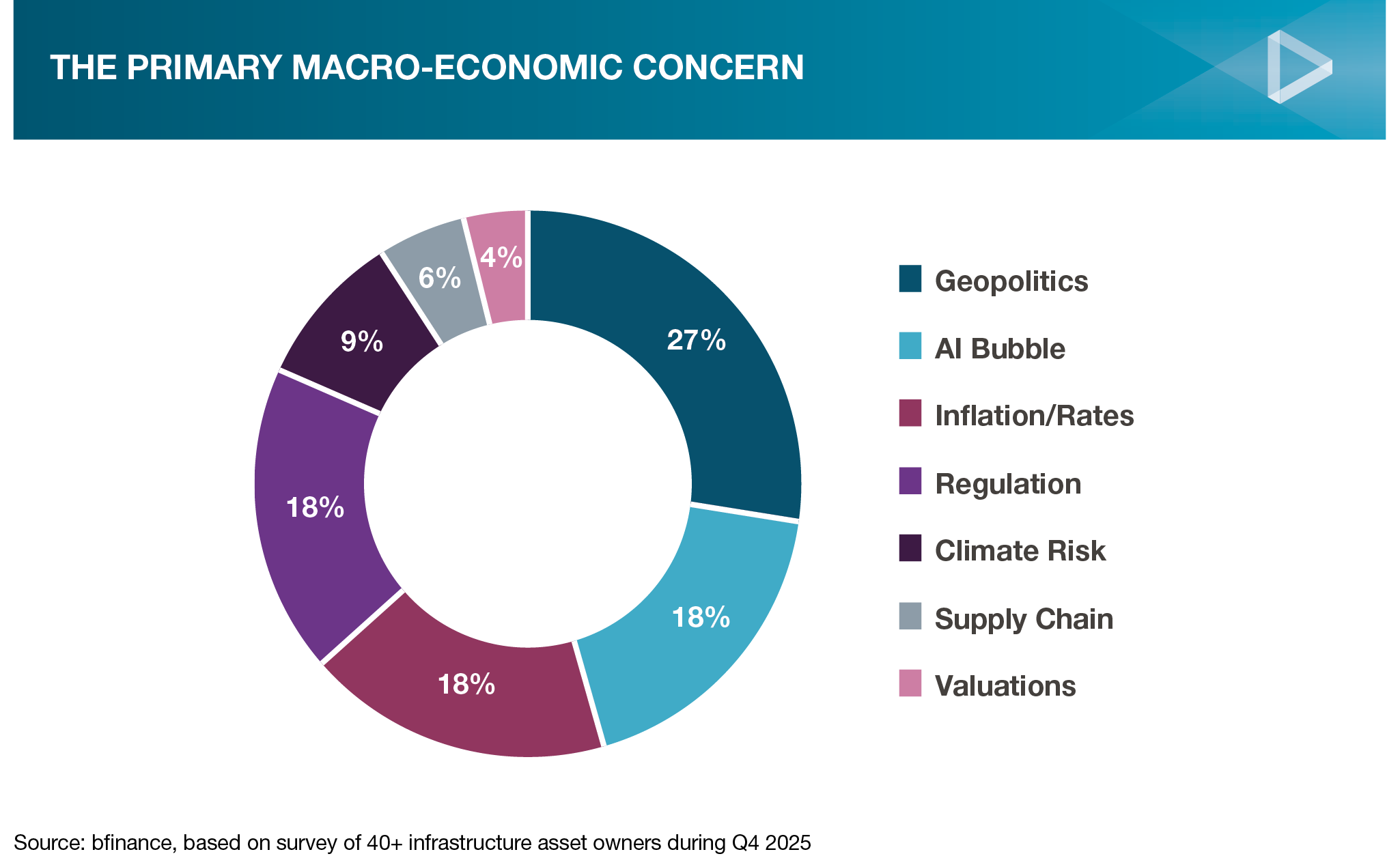
Some 27% of investors named ‘geopolitics’ as their number one concern for the infrastructure asset class, citing tariffs, immigration, energy security and US-China decoupling. Meanwhile,18% picked ‘AI bubble’ – a subject that also, of course, has huge geopolitical relevance.
We are a long-term investor and thinking about the megatrends. Given infrastructure's linkage to the megatrends, we are less concerned about short term risks
Several investors expressed unease about the exuberance surrounding data centre valuations, with some trading above 25x earnings before interest, tax, depreciation and amortisation (EBITDA) (a level that one allocator described as “difficult to wrap my head around”).
There's this gold rush for AI and whenever you have things like this, there's always an overbuild, there's always a bubble. I'm concerned about some of those risks and taking on single counterparty risk
Inflation/rates was another popular choice (18%), as was regulation. Only 9% chose ‘climate risk,’ illustrating the shift in sentiment since the late-2010s due to the immediacy of current issues facing even long-term investors.
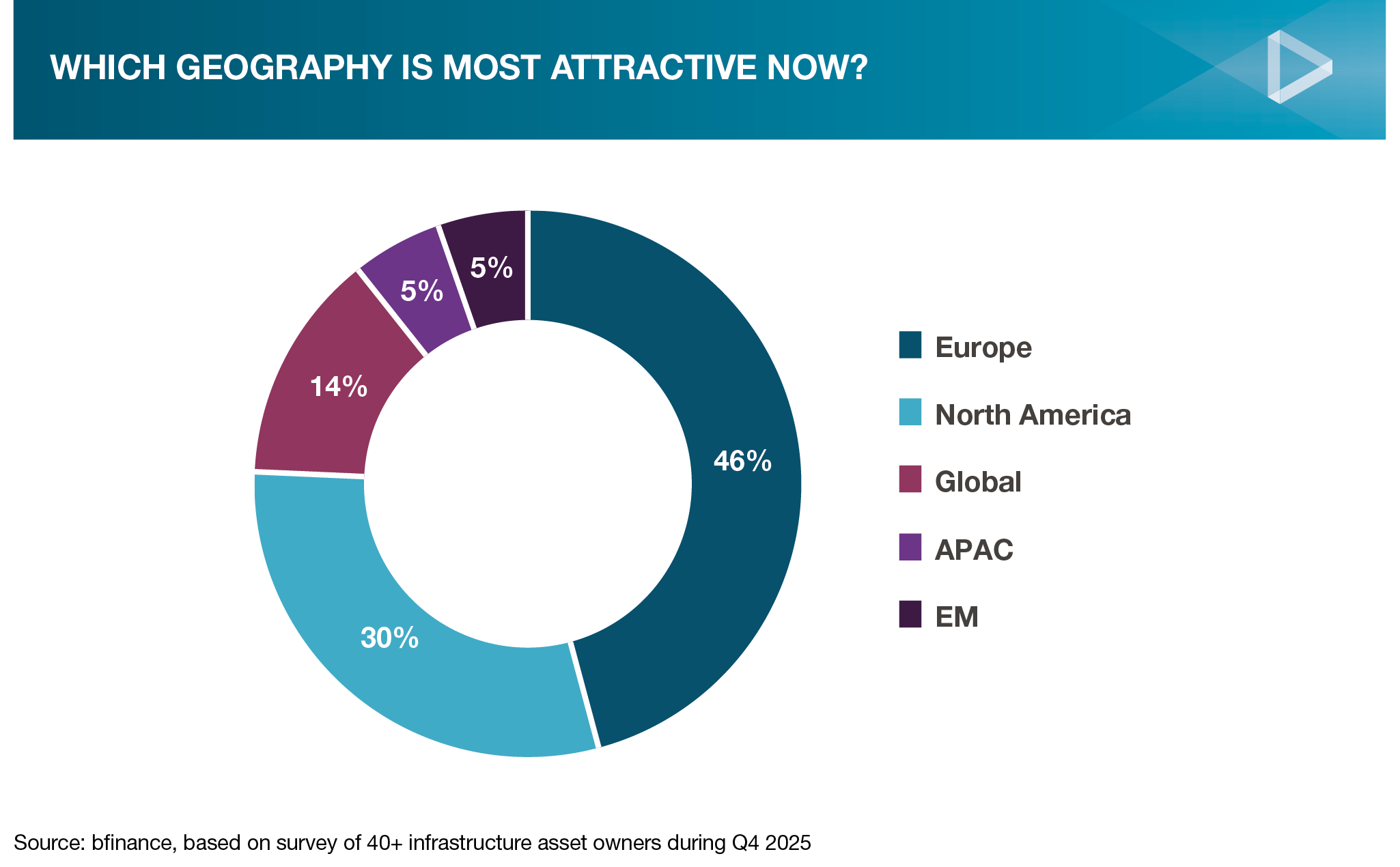
The way investors deploy capital is being affected by a more volatile macro-economic and geopolitical environment. The reduced appetite for greenfield investment has already been noted above. Survey preferences also reveal a clear preference for Europe (46%) over North America (30%): Europe is viewed by many participants as steadier from a regulatory and political perspective, while US exposure now carries heightened board‑level scrutiny, despite some investors seeing opportunities for better valuation resets, particularly in the energy transition space.
Regulatory uncertainty presents a risk as well as an opportunity
As one Nordic Pension Fund put it, allocations to the US could trigger “a lot of questions and… negative emotions”.
Somewhat paradoxically, even while macroeconomic and geopolitical developments are causing concern, they also underpin key ‘thematic’ narratives that are drawing investors’ attention and capital. The survey highlights energy transition and renewables (36%), digital infrastructure (24%) and power/electrification (20%) as leading areas of investor interest.
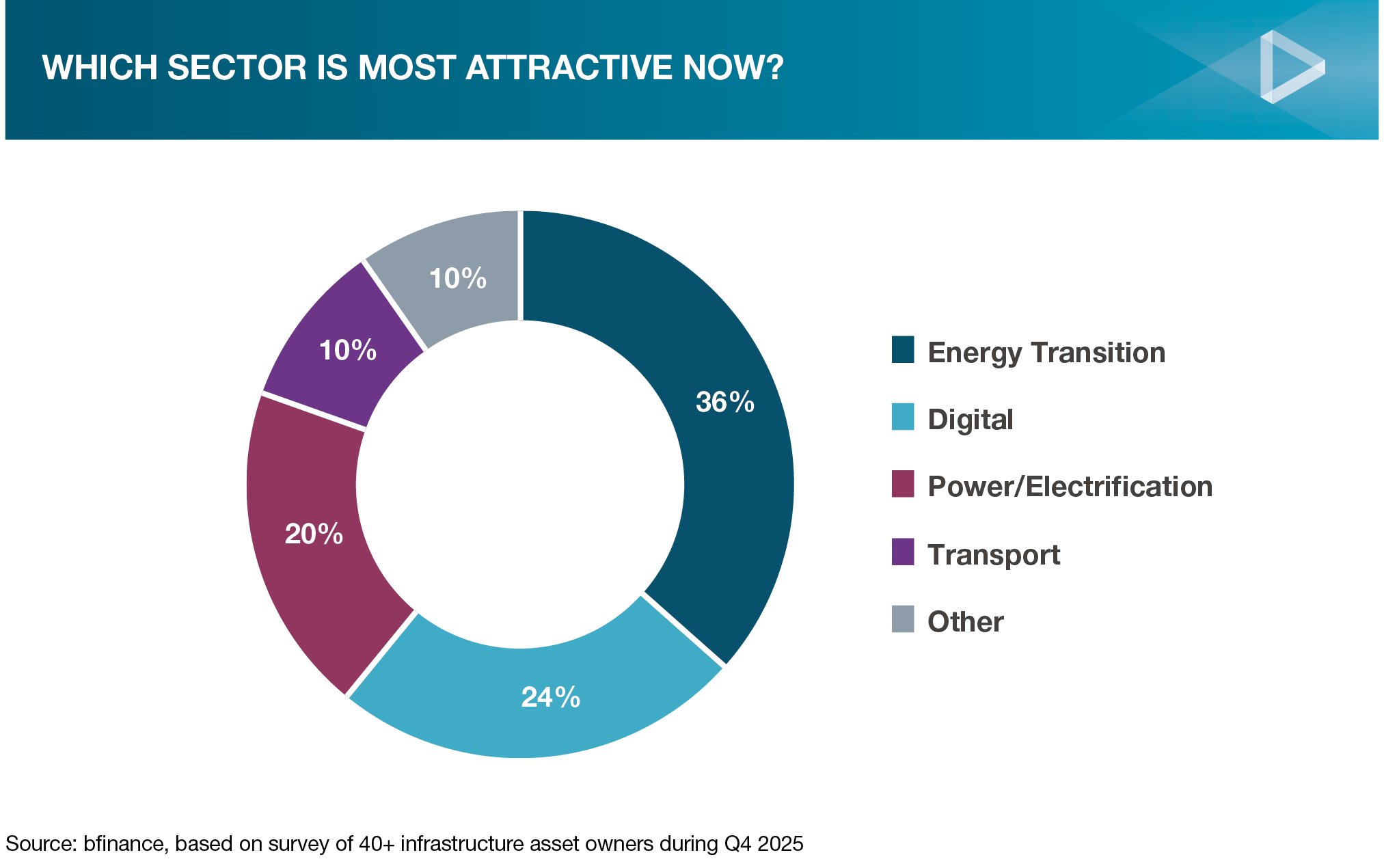
Allocators are, it should be said, approaching these themes more selectively. Some emphasised the importance of avoiding concentration: “We need to be balancing that out… not increasing too much,” said one, referring to their goal of 20% digital exposure in the portfolio.
Others pointed to emerging market power systems, electrification backlogs and grid bottlenecks as areas of potential upside, albeit with heightened risk premiums.
AI bubbles bursting are our biggest concern. Is demand in data centres correctly estimated? Technological advances could be a potential concern. Fibre was overbuilt in Covid for example, could data centres/AI be the same?
If you asked me four years ago, renewables were a straightforward inflation hedge, ballast, stable returning asset… but the sector’s pivot toward private equity style growth plays means underwriting is now materially harder.
The data centre multiples that we're seeing are difficult for me to wrap my head around. But if you don't invest directly in data centres, there’s opportunities in data centre-adjacent technology such as behind-the-meter renewables
We’re very mindful of whether we’re heading into a bubble at the moment, especially with the AI-driven hype around data centres. The technology risk and obsolescence risk are real
Some clients are somewhat cautious towards the US but it is a massive market and is difficult to avoid completely
Takeaway 3: A shift in manager relationships and fund structure preferences
Finally, the way investors build infrastructure portfolios is undergoing subtle but meaningful change. The shift is driven by a desire for cleaner portfolio architecture, stronger alignment and more predictable outcomes.
Firstly, tolerance for long-duration fund structures is tightening, even among investors who theoretically have the capacity for long-dated capital. Most investors want to see capital returned within 10-15 years, even for assets with multi-decade lifespans. Long-tenor or “evergreen” structures are acceptable only when they align cleanly with the role that the assets play in the portfolio; elsewhere, investors favour clarity on exit routes and the ability to recycle capital into new vintages.
This shift also affects the historical debate about open‑versus closed‑ended structures. In brief, open-ended vehicles are often favoured for core, income-oriented exposures, while closed-ended funds remain the default for value-add, transition and operational-improvement strategies.
Another clear trend is the move toward fewer, deeper manager relationships. Pressures on cost, internal resource constraints and a heightened focus on alignment are encouraging investors to consolidate their external fund manager rosters and build long-term partnerships with a small number of trusted suppliers.
These relationships are then selectively complemented by thematic or sector-specialist mandates that are seen to provide genuine incremental value.
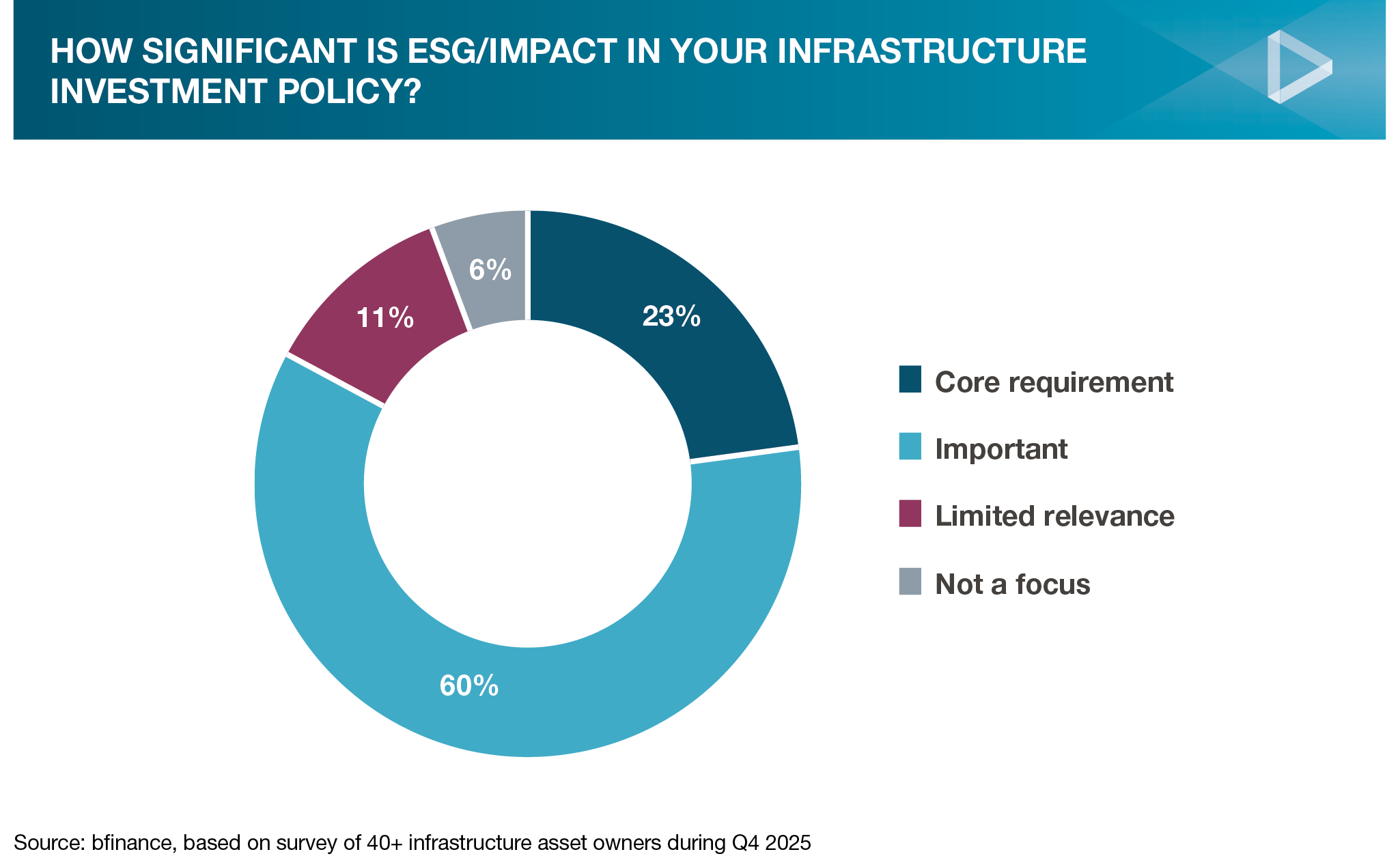
Finally, ESG implementation is also becoming more pragmatic and operational. Rather than pursuing labels or certification, investors emphasise the management of climate risk, biodiversity exposure, governance quality and reputational considerations. Many noted that the real challenge is data quality and consistency – particularly within energy transition assets where reporting standards remain uneven – and that meaningful ESG analysis increasingly relies on direct engagement and manager transparency rather than high-level categorisations.
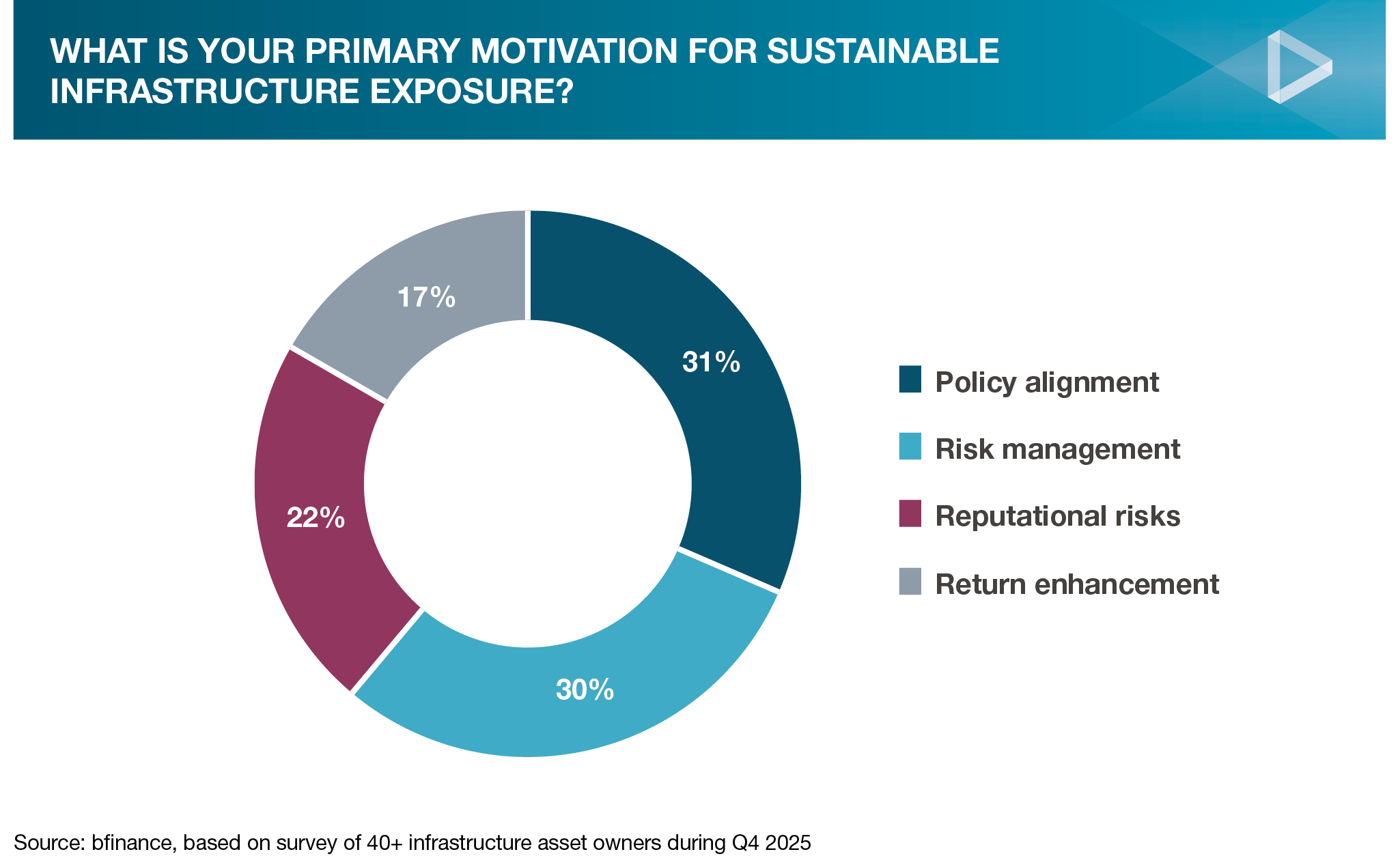
Amid these trends, there is a common thread: investors want clarity of purpose, alignment of interest and exposures that behave as expected across market cycles, as opposed to structural innovation for innovation’s sake. The asset class is highly regarded but its core institutional client base wants it to be delivered through simpler, cleaner and more dependable mechanisms.
Conclusion: an era of greater discipline?
The sentiment that emerges from this study is clear. Investors are confident in the long-term role of the infrastructure asset class, but they are more selective about how and where they take risk, more attuned to macro forces, and more cautious in how they structure portfolios and relationships. This is not a retreat from infrastructure – it is a refinement. Disciplined conviction and alignment of interest must replace blanket optimism and bullish messaging. A market once defined by enthusiasm must now be defined by experience.
Important Notices
This commentary is for institutional investors classified as Professional Clients as per FCA handbook rules COBS 3.5R. It does not constitute investment research, a financial promotion or a recommendation of any instrument, strategy or provider. The accuracy of information obtained from third parties has not been independently verified. Opinions not guarantees: the findings and opinions expressed herein are the intellectual property of bfinance and are subject to change; they are not intended to convey any guarantees as to the future performance of the investment products, asset classes, or capital markets discussed. The value of investments can go down as well as up.