English (Global)
  Français (France)
  Deutsch (DACH)
  Italiano (Italia)
  Dutch (Nederlands)
  English (United States)
  English (Canada)
bfinance insight from:

Robert Doyle
Managing Director, Head of Equity

Ahmed Mohamoud
Senior Associate, Equity
“Return on Investment” (ROI) is a well-known concept in finance and usually means one thing: how much your portfolio or investment has grown. Gains, income, appreciation – rolled into a single number. But in Malaysia’s institutional market, ROI means something else entirely. It’s not about growth. It’s about accounting income realised – through dividends and capital gains – measured against the book cost (investment value) of the portfolio.
This distinction is critical. In Malaysia, ROI shapes how internal allocators and asset managers invest, when they trade, and how performance is judged. And it applies not only to domestic portfolios. ROI influences how asset managers are selected and monitored so, for those firms looking to engage with Malaysian investors, the local concept of ROI is vital to understand.
What it means
In Malaysia, ROI refers specifically to realised income – income that has been booked from two sources:
- Dividends (from stocks) or coupons (from bonds)
- Capital gains realised through the sale of securities
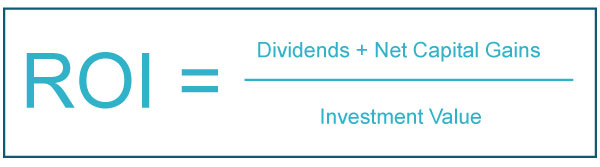
ROI is calculated against investment value (cost of acquiring holdings), not market value. ROI measures crystallised income, not current portfolio valuation. For example, a portfolio with RM100 million investment value and a 6% ROI target must generate RM6 million of realised income. Market value fluctuations don’t affect this target.
Unlike total return – which includes unrealised gains and is mark-to-market – Malaysia’s ROI excludes unrealised gains and focuses solely on realised income relative to cost.
As a result, the two can diverge meaningfully:
- A manager may outperform on total return but miss the ROI target if gains aren’t realised.
- A portfolio might hit the ROI target by crystallising past gains, even while underperforming its benchmark.
These mismatches are especially common in equity portfolios, where the timing of trades and the distribution of gains across the year can heavily influence ROI.
ROI measures income delivery. Total return measures value creation. Both matter, but they serve different purposes.
ROI’s appeal lies in its simplicity. But simple metrics can create complex behaviours.
- Malaysian asset manager
Why the ROI structure exists
Malaysian institutional investors use ROI because it:
- aligns with funding needs requiring regular cash distributions. While ROI is not itself a cash distribution, it ensures that income is available to support one.
- provides verifiable benchmarks for manager assessment without reliance on unrealised gains.
- reflects long-established conventions.
In fixed income, ROI fits more naturally with coupon payments. In equities, meeting ROI usually requires selling appreciated positions, leading to timing, liquidity, and turnover considerations. Managers may trade tactically around core holdings or short-term catalysts to support ROI. They may hold positions with unrealised losses longer to avoid crystallising them and hurting ROI.
ROI targets are objectives – not guarantees
ROI targets for equity mandates (both domestic and international) typically range from 3% to 8%, depending on the investor’s objectives. These targets are set annually and communicated to managers. But they are targets – not guarantees.
In favourable markets, delivering the target can be straightforward. But in more difficult or volatile environments, even a well-constructed, fundamentally sound portfolio may fall short – not necessarily due to poor decisions, but from timing.
Most investors measure ROI over multi-year horizons, often three years, accepting that income realisation is irregular. Some roll shortfalls forward; others assess strictly by calendar year. Ongoing client dialogue is essential.
To obtain ROI, we need to realise more from capital gains than dividend income. That means harvesting profitable positions when they’ve reached target price – even if they remain attractive longer-term.
- Malaysian asset manager
Portfolio and manager implications of ROI
ROI mandates affect portfolio structure and behaviour:
- Managers may need to realise gains from appreciated stocks, even if they remain fundamentally attractive. Such stocks could be immediately repurchased – though round-trip transaction costs will be incurred.
- Portfolio investment value rises as gains are reinvested, increasing the absolute value of the ROI target over time.
- Comparison across managers is challenging, as ROI can be defined and delivered differently in each case.
Typical portfolio tilts to deliver ROI:
- Dividend-paying stocks with predictable cash flows
- Lower-volatility sectors
- Shorter holding periods
Common underweights include:
- High-growth, long-duration stocks
- Turnaround stories needing longer horizons
- Less liquid names that are harder to exit
ROI pressure complicates long-term strategic holdings, including ESG themes, where realisations may be inconsistent with stewardship.
The ROI target is the benchmark, hence, depending on how low or high that ROI requirement is, it will dictate the asset allocation, the skew of the portfolio — whether more or less defensive — and the stocks that the portfolio is populated with.
- Malaysian asset manager
One manager described managing ROI delivery as “walking a fine line” that requires ongoing vigilance. Another emphasised the need for liquidity and adaptability, highlighting that “portfolios must churn income while managing downside risk."
Managers should take care to monitor ROI delivery, as standard tools often don’t suffice. Tracking and forecasting ROI may require dedicated internal systems, granular tracking of realised vs unrealised gains, and tighter alignment between analytics and mandate objectives. Smoothing the recognition of ROI throughout the year – rather than bunching it at year-end – is often advisable.
The role of unrealised gains
Though excluded from ROI calculations, unrealised gains matter. Long-term holdings may accrue paper profits that don’t contribute to income targets until sold. This raises key considerations:
- Should mandates acknowledge or track unrealised gains separately?
- How do managers report these internally or to clients?
Some investors adopt dual reporting – tracking both realised ROI and total return – to provide a more complete view of portfolio progress. This is aggregated across the year and often presented alongside TWRR and benchmark-relative returns.
Key risks
- Pressure to trade
Managers aiming to meet ROI targets may prioritise crystallising gains over maximising long-term value. This can result in:
- Premature sales of high-conviction positions
- Disruption of compounding
- Tactical trading that’s inconsistent with the long-term strategy
One manager noted that “while our priority is still outperformance, delivering ROI often forces trading in the most liquid stocks to minimise market impact.”
- Cost and tax drag
Higher turnover driven by ROI delivery can lead to increased transaction costs and, in some jurisdictions, tax leakage. These impacts may not be fully visible in headline ROI but reduce net investor value.
- Style drift and portfolio distortion
To realise gains, managers may shift toward shorter-duration or higher-yielding positions. Over time, this can undermine the integrity of an investment strategy. The need to avoid crystallising losses can create unhealthy bias. Managers may hold underperformers too long, while winners are harvested – creating structural imbalances over time.
- Incentive misalignment
An ROI target should be aligned with how managers are assessed and paid. Misalignment arises when:
- ROI is mandatory, but incentives are tied to total or relative return
- Managers are penalised for deferring gains, even when it aligns with process
- ROI delivery comes at the cost of broader risk-adjusted outcomes
Managers note that high ROI in a single year can create false expectations – especially if achieved via aggressive realisations that undermine portfolio sustainability. A strong ROI figure may mask weak underlying positioning or benchmark underperformance.
As one manager put it, “ROI mandates can encourage profit-taking of good stocks and retention of bad stocks."
- Inflexible shortfall treatment
Some mandates roll ROI shortfalls forward; others do not. In stricter frameworks, this can lead to end-of-period behaviour that’s focused on optics rather than fundamentals.
- Client misconceptions:
Managers emphasise that high ROI in one year is not predictive of future delivery. ROI is heavily influenced by market timing, trading opportunities, and broader conditions – yet clients often assume consistency.
The Malaysian market isn’t consistently positive; it can be flat or subdued for long periods, making steady ROI delivery difficult.
- Malaysian asset manager
Evolving the ROI framework
There is growing interest in adapting ROI frameworks to better reflect market realities. Some investors are moving beyond fixed annual targets and exploring:
- Target ranges(e.g. 6–8%) that provide a buffer for market volatility
- Rolling multi-year targets(e.g. 18% over 3 years) that better accommodate ‘lumpy’ returns
- Hybrid modelsthat incorporate both realised income and unrealised gains to give a fuller picture of performance
These adaptations aim to improve alignment between investment process and mandate goals.
Managers also suggested allowing “accounting profit transfers” – the ability to reclassify unrealised gains as realised income for ROI purposes – to ease mechanical selling. While this would require changes in mandate design and governance, it could significantly reduce turnover and improve alignment with long-term investment goals.
ROI mandates should have flexible targets, adjusted after discussion between client and manager, to protect portfolio health
- Malaysian asset manager
Final thoughts
In Malaysia’s institutional market, ROI is not just another performance metric – it’s a formal income objective. Unlike total return, it focuses on realised income and is measured against investment cost, not market value. That distinction affects how managers build portfolios, realise gains, and report results.
For fixed income managers, ROI aligns reasonably well with predictable cash flows. But for equity managers, it introduces real portfolio trade-offs: delivering ROI may require selling strong positions, increasing turnover, and responding to short-term market moves.
While ROI targets are annual, success is often judged over a longer horizon – typically three years – recognising that markets are unpredictable. What matters most is whether the manager’s process remains intact and well aligned.
Ultimately, ROI ≠ Performance – and understanding that distinction is essential for sound evaluation and informed decision-making.
Investor insight: PNB on balancing ROI and long-term performance
Nik Ahmad Ariff Abdul Aziz
Head of External Fund Management
Permodalan Nasional Berhad (PNB)
At PNB, we believe that the annual ROI objective should be sustainable and reflective of both the long-term performance of the asset class and the manager’s alpha contribution.
While ROI delivery is prioritized to meet annual distribution expectations, it is equally important to ensure that the portfolio’s total return aligns with the performance of the asset class. Over the long term, sustainable ROI can only be achieved through consistent total return generation. Therefore, balancing these two objectives – ROI and total return – is critical.
In strong equity market years, there is often a temptation to extract a higher ROI from the portfolio. However, this can lead to an elevated investment cost basis due to reinvestments, which may become a headwind for future ROI generation. Setting an overly ambitious ROI target may also encourage managers to retain underperforming stocks, potentially compromising long-term portfolio performance.
Maintaining this balance requires a focus on overall asset quality. We closely monitor the proportion of unrealized gains versus unrealized losses, particularly the percentage of the portfolio in deep unrealized loss positions. Such positions are less likely to recover and can hinder ROI delivery. Ongoing engagement with managers is essential to determine appropriate action plans that consider both ROI and total return objectives.
ROI delivery is especially challenging at the inception of a mandate. In the early stages, market timing and the manager’s stock selection accuracy – or hit rate – are key drivers of ROI. For equity portfolios, the limited availability of paper gains in newly constructed portfolios makes ROI generation more difficult, particularly if the mandate is funded during a prolonged market downturn.
In these initial years, managers must adopt a more active approach, including precise market timing and higher portfolio turnover, to meet ROI targets. From the asset owner’s perspective, a gradual funding strategy over the first 12 months can help smoothen the portfolio’s investment cost, especially during market drawdowns.
In conclusion, managing an equity ROI mandate requires a delicate balance between delivering realized income and preserving long-term portfolio performance. Strategic funding, active management, and continuous dialogue with managers are key to achieving sustainable ROI outcomes.
Important Notices
This commentary is for institutional investors classified as Professional Clients as per FCA handbook rules COBS 3.5R. It does not constitute investment research, a financial promotion or a recommendation of any instrument, strategy or provider. The accuracy of information obtained from third parties has not been independently verified. Opinions not guarantees: the findings and opinions expressed herein are the intellectual property of bfinance and are subject to change; they are not intended to convey any guarantees as to the future performance of the investment products, asset classes, or capital markets discussed. The value of investments can go down as well as up.